.jpg)
.jpg)


.jpg)










How Soumik Bandyopadhyay Is Guiding Indian Promoters Through Generational Transitions
The founding generation often carries memories of building the business through uncertainty, sacrifice, and personal risk. Their decisions are shaped by experience and a strong instinct for preservation.

%20(1).jpg)
New Delhi [India], June 25: India is entering one of the most significant wealth and leadership transitions in its business history. Across industries, founders who built successful enterprises over the past three to four decades are now confronting a challenge that is very different from building businesses: ensuring that those businesses continue to thrive across generations.
For many promoters, the transition is not simply about handing over operational control. It involves addressing questions of leadership, governance, ownership, family alignment, and long-term legacy. While businesses can often be structured through systems and processes, family transitions involve people, relationships, and emotions, making them significantly more complex.
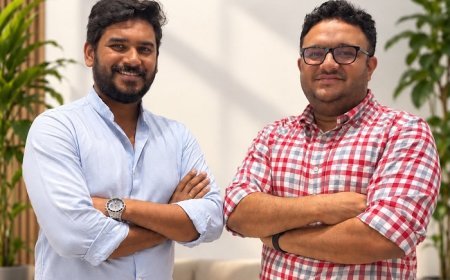
It is within this context that Soumik Bandyopadhyay has built a distinctive advisory practice focused on helping business families navigate these critical transitions.
Looking Beyond Succession
One of the central themes in Soumik Bandyopadhyay’s work is the belief that succession planning is often misunderstood.
Many promoters view succession as identifying the next leader or transferring ownership. However, according to Soumik, leadership transition is only one component of a much larger process.
A successful generational transition requires families to think about continuity at multiple levels. It involves clarifying roles, creating governance structures, aligning expectations, preparing future leaders, and ensuring that decision-making frameworks can survive beyond any one individual.
In many family enterprises, discussions around succession begin too late. By the time the topic becomes urgent, family dynamics and leadership expectations may already be deeply entrenched. Soumik’s approach encourages families to start these conversations much earlier, allowing time for alignment and preparation.
Bridging Two Very Different Perspectives
One of the recurring challenges within family businesses is the difference in outlook between generations.
The founding generation often carries memories of building the business through uncertainty, sacrifice, and personal risk. Their decisions are shaped by experience and a strong instinct for preservation.
The next generation enters the business under very different circumstances. They are often globally educated, technologically aware, and exposed to new industries and investment opportunities. Their focus may be on innovation, diversification, and growth.
Neither perspective is inherently right or wrong. The challenge lies in creating a framework where both can coexist productively.
A significant part of Soumik’s advisory work involves helping families bridge this gap. Using professional tools and structures, he focuses on creating structured conversations that allow different viewpoints to be heard and understood; rather than positioning generations against one another.
This process often helps families move from disagreement to alignment.
Creating Structures That Outlast Individuals
Throughout his career, Soumik has consistently emphasized the importance of institutionalizing family enterprises.
Many successful promoter-led businesses rely heavily on the judgement, relationships, and leadership of the founder. While this can drive rapid growth, it also creates dependency.
As businesses become larger and more complex, this dependency becomes a risk.
Soumik advocates for governance mechanisms that reduce reliance on individuals and strengthen reliance on systems. This includes establishing family councils, governance frameworks, ownership structures, and decision-making protocols that can continue functioning across generations.
The objective is not to reduce the founder’s influence. It is to ensure that the business remains stable even when leadership transitions occur.
In his experience, businesses that invest in governance early tend to navigate transitions more effectively than those that rely solely on informal arrangements.
Addressing the Human Side of Wealth
One aspect that distinguishes family business transitions from corporate leadership changes is the emotional dimension involved.
Questions of succession often intersect with questions of identity, control, trust, and recognition. Family members may have different perceptions of fairness, responsibility, and opportunity.
According to Soumik, many conflicts within business families are not caused by financial disagreements alone. They often stem from communication gaps and unspoken or perceived expectations.
This is why his work frequently involves facilitating discussions that allow families to address sensitive issues openly with the context of governance structures. These conversations may involve leadership roles, ownership structures, future aspirations, or differing risk appetites.
By creating a neutral environment for such discussions, families are often able to address challenges before they evolve into larger conflicts.
Preparing the Next Generation for Stewardship
A recurring theme in Soumik’s work is the distinction between inheritance and stewardship.
In many family businesses, the next generation is expected to inherit leadership responsibilities. However, inheritance alone does not automatically create readiness.
Future leaders must develop the ability to make decisions, understand risk, manage stakeholders, and lead through uncertainty. They also need to appreciate the values and principles that contributed to the business’s success in the first place.
Soumik often encourages families to expose younger members to governance discussions early. This allows them to understand not only how decisions are made, but also why they are made.
Such exposure helps build confidence, accountability, and long-term perspective.
Rather than viewing leadership transition as a single event, he sees it as a gradual developmental process.
Balancing Growth and Preservation
As Indian businesses become increasingly global, promoters face a new challenge: balancing entrepreneurial ambition with long-term preservation.
The next generation may seek expansion into new markets, technologies, or investment opportunities. At the same time, the family may need to preserve wealth, maintain stability, and manage risk.
Soumik’s advisory approach focuses on creating structures that allow both objectives to coexist.
Through governance frameworks and family office structures, businesses can create pathways for innovation while maintaining oversight and accountability. This reduces the likelihood of conflict between growth-oriented and preservation-oriented perspectives.
The result is often a more balanced approach to long-term value creation.
The Growing Importance of Family Offices
As wealth becomes more diversified and family structures become more complex, family offices are playing an increasingly important role in supporting generational transitions.
For Soumik, a family office is not merely an investment platform. It is a governance platform that helps families manage the relationship between wealth, ownership, and continuity.
Through family office structures, families can create systems for decision-making, risk management, communication, and succession planning. These structures help ensure that family wealth is managed with the same discipline and foresight that helped create it.
As more Indian promoters recognize the importance of institutionalizing wealth management, the role of family offices is likely to become even more significant.
A Focus on Continuity
At the heart of Soumik Bandyopadhyay’s work is a simple belief: building wealth and sustaining wealth are two very different challenges.
Many entrepreneurs spend decades creating successful businesses. However, preserving those businesses across generations requires a different set of skills, structures, and conversations.
Through his work with Indian business families, Soumik helps promoters prepare for that reality. By focusing on governance, communication, leadership development, and long-term planning, he supports families in creating continuity that extends beyond individual leaders.
As India enters a period of significant intergenerational wealth transfer, these conversations are becoming increasingly important.
For many promoters, the future of the business will not be determined solely by market conditions or growth opportunities. It will be determined by how effectively they prepare the next generation to carry the legacy forward.
In that journey, structured guidance, thoughtful governance, and early preparation can make all the difference.


